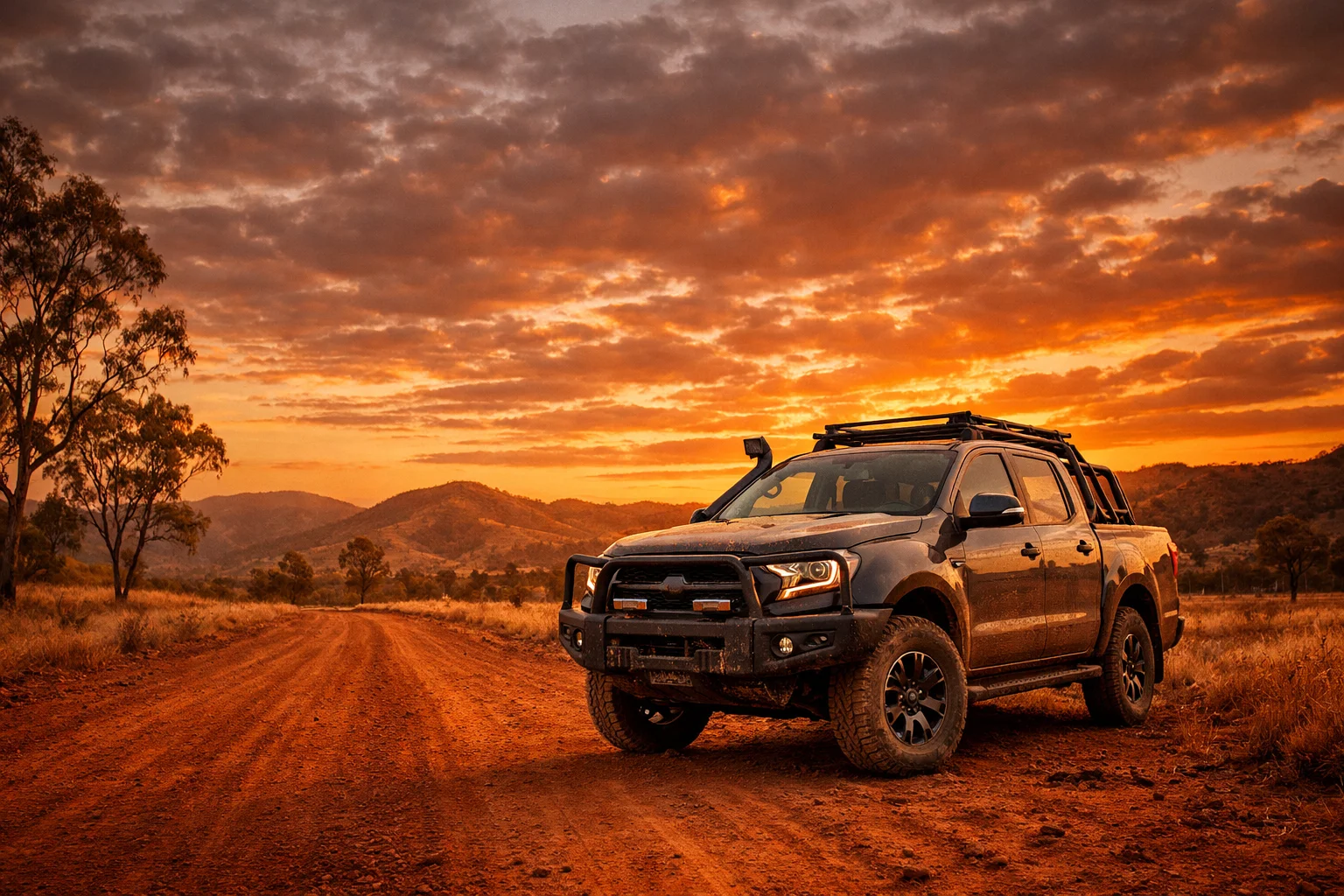
Quick Guide: Truck Finance Options
| Vehicle Type | Typical Finance | Deposit | Term | Best For |
|---|---|---|---|---|
| Utes (HiLux, Ranger) | Chattel mortgage | 0-20% | 3-5 years | Tradies, contractors |
| Light trucks (<4.5t) | Chattel mortgage | 10-20% | 3-7 years | Delivery, farm use |
| Heavy trucks (>4.5t) | Commercial loan | 20-30% | 5-7 years | Transport, mining |
| Specialised (tipper, crane) | Equipment finance | 20-40% | 5-7 years | Construction, mining |
Key Takeaways
- Most business utes and light trucks qualify for standard chattel mortgage or hire purchase finance.
- Heavy vehicles often require specialist commercial lenders with higher deposits.
- Your trading history matters: 2+ years in business gets the best rates; startups can still get approved with the right approach.
- GST-registered businesses should consider chattel mortgage for upfront GST claims.
Understanding Truck Finance in Central Queensland
Whether you're a sole trader buying your first work ute or a mining contractor adding to your fleet, financing commercial vehicles works differently from regular car finance.
Why Truck Finance Is Different
Commercial vehicles are assessed differently by lenders:
- Higher values: Trucks cost more, so loan amounts are larger
- Different depreciation: Some trucks hold value well; others depreciate faster
- Business use: Lenders want to see how the vehicle generates income
- Specialisation: A tipper truck has a smaller resale market than a HiLux
This means lenders look more closely at your business viability, not just your credit score.
Finance Options for CQ Businesses
1. Chattel Mortgage (Most Common)
How it works: You own the vehicle from day one. The lender secures the loan against the vehicle.
Best for: GST-registered businesses wanting to claim GST upfront.
Typical terms:
- Loan terms: 1-7 years
- Interest rates: From 6-10% (depending on business strength)
- Deposit: 0-20%
- Balloon: Optional (usually up to 40%)
Learn more about chattel mortgage vs hire purchase
2. Hire Purchase
How it works: The finance company owns the vehicle until final payment. Ownership transfers to you at the end.
Best for: Businesses not registered for GST, or those wanting off-balance sheet financing.
3. Finance Lease
How it works: You lease the vehicle for a fixed term. At the end, you can purchase it for a residual value, return it, or refinance.
Best for: Businesses wanting to preserve capital or upgrade vehicles regularly.
4. Equipment Finance (Heavy Vehicles)
How it works: Specialist finance designed for heavy equipment, including trucks over 4.5 tonnes.
Best for: Transport companies, mining contractors, and logistics businesses.
Typical terms:
- Loan terms: 3-7 years
- Interest rates: 7-12% (higher risk profile)
- Deposit: 20-40% often required
- Stricter business requirements
What CQ Lenders Look For
Business Financials
Lenders want to see:
- 2+ years trading history (ideal, but not always required)
- Profitable operations or clear path to profitability
- Stable or growing revenue in your industry
- Reasonable existing debt levels
Mining contractors: Lenders understand the cyclical nature of mining. Having contracts in place helps, even if you're new to self-employment.
The Vehicle Itself
Lenders assess the truck based on:
- Age: Most prefer under 10 years old at loan end
- Kilometres: Lower km means better resale, better rates
- Make/model: Popular brands (Toyota, Hino, Isuzu) are easier to finance
- Condition: A well-maintained vehicle is less risky
- Purpose: General use is easier than specialised (e.g., refrigerated, crane-equipped)
Your Industry
Some industries find truck finance easier in CQ:
Easier to finance:
- Building and construction
- Agriculture and cattle
- Courier and delivery services
- Established mining contractors
May need specialist lenders:
- New mining services contractors
- Long-haul transport (high km usage)
- Startup logistics companies
Step-by-Step: Getting Truck Finance Approved
Step 1: Know Your Numbers
Before applying, understand:
- How much can you afford? Include repayments, fuel, registration, maintenance, insurance
- What vehicle do you need? Overborrowing for "just in case" costs you money
- What's your business use percentage? This affects tax deductions
Step 2: Gather Your Documents
Typical requirements:
- ABN registration (active, ideally 2+ years)
- Driver's licence (current, appropriate class for the vehicle)
- Business financials (2 years tax returns, BAS statements)
- Bank statements (3-6 months business account)
- Asset and liability statement (what you own and owe)
Mining contractors: Include any current contracts or regular client arrangements.
Step 3: Get Pre-Approval
Pre-approval tells you:
- How much you can borrow
- What interest rate to expect
- What deposit (if any) is required
- How long the process will take
Step 4: Find the Right Truck
With pre-approval in hand:
- Search Australia-wide (not just CQ) for the best deal
- Consider ex-fleet vehicles (often well-maintained, lower prices)
- Factor in transport costs if buying from Brisbane or interstate
- Get an independent inspection before committing
Step 5: Finalise and Settle
Typical timeline: 2-5 business days from application to settlement.
Deposit Requirements by Vehicle Type
Utes and Light Commercial (Under $80,000)
- Established business (2+ years): 0-10% deposit
- New business (under 2 years): 10-20% deposit
- Credit issues: 20-30% deposit
Light Trucks ($80,000-$150,000)
- Established business: 10-20% deposit
- New business: 20-30% deposit
- Specialist vehicles: 20-30% deposit
Heavy Vehicles (Over $150,000)
- Established transport/mining business: 20-30% deposit
- New to heavy vehicles: 30-40% deposit
- Specialised equipment: 30-50% deposit
Tax Benefits of Truck Finance
CQ businesses can claim:
GST Recovery
With chattel mortgage, claim the full GST upfront on your next BAS. On a $110,000 truck, that's $10,000 back in your pocket within months.
Interest Deductions
All interest payments are tax-deductible as a business expense.
Depreciation
Claim depreciation on the vehicle's value over its effective life (typically 8 years for trucks).
Instant Asset Write-Off
Depending on current tax rules, you may be able to claim an immediate deduction for vehicles under certain thresholds. Check with your accountant—these rules change frequently.
Common Mistakes to Avoid
1. Financing More Truck Than You Need
It's tempting to buy the bigger truck "just in case." But every extra dollar borrowed costs interest.
2. Ignoring Total Cost of Ownership
Factor in fuel, registration, insurance, maintenance, and tyres—especially for heavy vehicles.
3. Not Shopping Around for Finance
Dealer finance is convenient but rarely the best rate. Always compare at least 2-3 finance options.
4. Forgetting About Licence Requirements
- C Class: Utes and vehicles up to 4.5 tonnes GVM
- LR (Light Rigid): Up to 8 tonnes GVM
- MR (Medium Rigid): Up to 11 tonnes GVM
- HR (Heavy Rigid): Over 8 tonnes, 3+ axles
5. Skipping the Pre-Purchase Inspection
Even new trucks can have issues. For used trucks, budget $300-$500 for a proper inspection.
Frequently Asked Questions
Can I finance a truck with a new ABN?
Yes, but expect stricter requirements. Larger deposit (20-30%), potentially higher rates, and personal guarantees may be needed. Industry experience helps significantly.
What's the maximum age for a truck I can finance?
Most lenders want the vehicle under 10-12 years old at loan end. Older trucks may need specialist lenders.
Should I buy new or used?
Used trucks (2-3 years old) often represent the best value. However, new trucks come with warranties and latest features.
Can I add fit-outs to the finance?
Yes. Many lenders will finance the truck plus fit-out (toolboxes, crane, tipper conversion) in one loan.
Next Steps
Ready to finance your next truck? Here's how to move forward:
- Truck finance options – Compare ute, truck, and trailer finance
- Business car finance – ABN holder finance explained
- Get in touch – Free consultation, no obligation
We work with Central Queensland businesses every day—from owner-operators in Rockhampton to mining contractors in Moranbah. Let us find you the right finance at the best rate.
This guide is general information only. Finance products and tax laws change regularly. Always consult your accountant and compare multiple finance options before committing.